Asia is the largest of the earth’s seven continents in both size and population. Among Americans, “Asia” probably first brings to mind countries like China, Japan, Thailand, and other East Asian nations; however, the Middle East and the Arabian Peninsula are part of Asia, too.
Encompassing a myriad of different peoples, cultures, and traditions, West Asia offers a variety of landscapes and destinations for travelers, from desert oases and beaches to the cosmopolitan cities of Istanbul, Abu Dhabi, Riyadh, and Doha. Bound by the Persian Gulf and the Aegean, Caspian, Arabian, Mediterranean, Red, and Black Seas, the region presents a tantalizing mix of ancient and modern world charm, with attractions to keep visitors of all tastes entertained.
1. Sohar – Oman
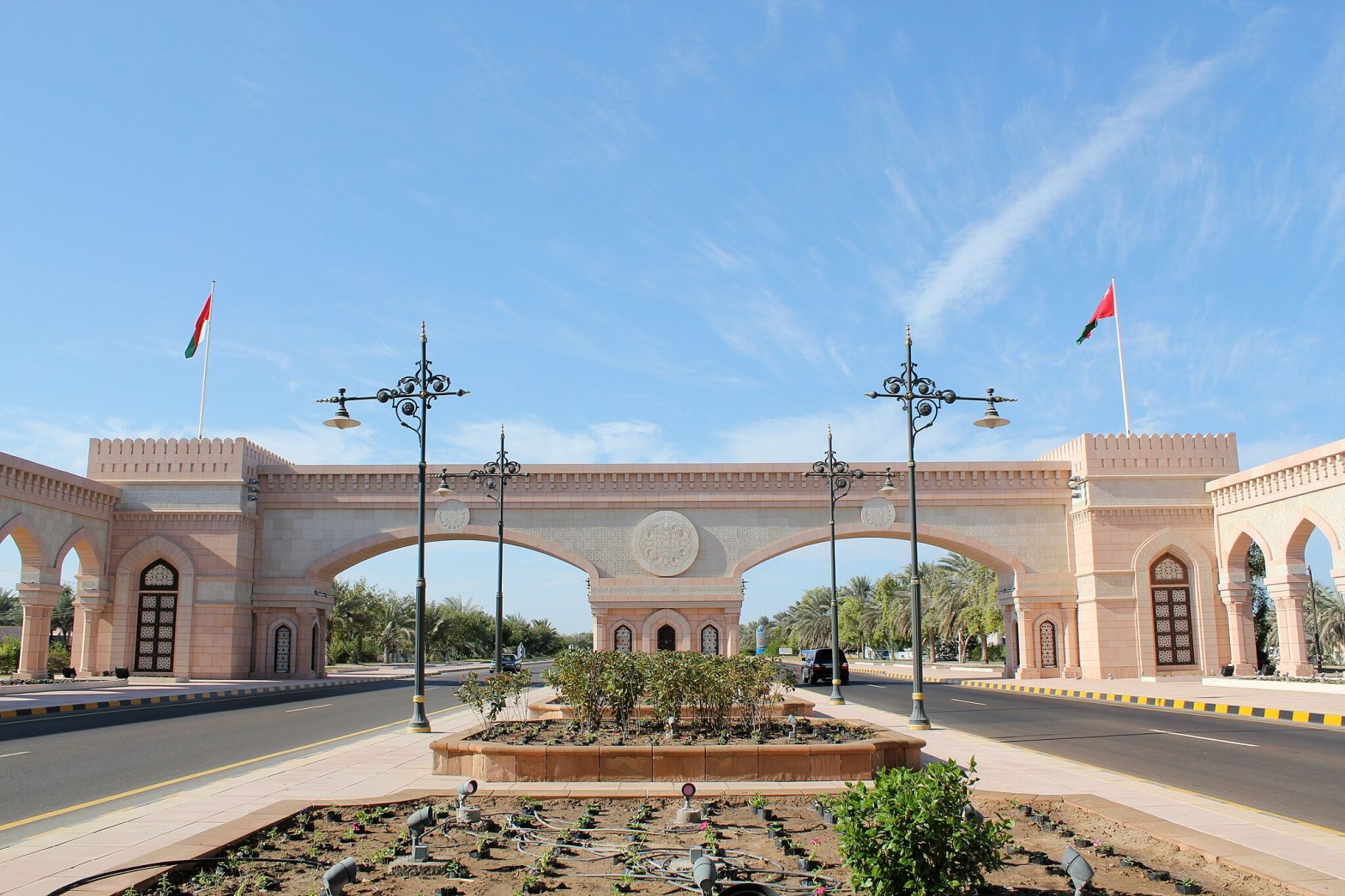
Home of the mythical character Sinbad the Sailor, Sohar is a blend of contemporary and ancient culture, boasting skyscrapers and huge malls as well as traditional souqs, monuments, and beaches along the mouth of the Persian Gulf.
A stroll along the Corniche brings visitors to several impressive destinations, including the Sultan Qaboos Mosque, and Sohar Fort. Recently restored, Sohar Fort features several traditionally furnished rooms, providing visitors with an authentic taste of military life in the 19th century CE. There is also a small museum located in the fort’s tower, providing insights into local history.
Believed to have been built around the end of the 13th century CE, Sohar Fort is situated on a hilltop, incorporating five towers and two parks: Sohar Park and the Silver Jubilee Park. One of Sohar’s most popular attractions, the fort boasts a 10-kilometer-long underground tunnel, created as an escape route should the city fall to invaders.
2. Zvartnots Cathedral Ruins and Etchmiadzin Cathedral – Armenia
Located near the city of Vagharshapat (also known as Etchmiadzin) in Armenia, Zvartnots Cathedral or the “Cathedral of Angels” was built between 650 and 659 CE by Catolicos Nerses III. The church was built on the spot where King Trdat met St. Gregory the Illuminator and is dedicated to the angels St. Gregory saw in a vision.
By the tenth century, the cathedral had collapsed due to an earthquake or attacks by invaders. It was not rediscovered until 1901, when archaeologists set about excavating the site, unearthing the foundations, portions of walls and vaulting, bases, sections of columns and piers, and fragments of reliefs. Surrounding the site are ruins of an ancient palace, including stone tanks and a wine press belonging to a medieval winery.
With the stunning Ararat Mountain as a backdrop, the ruins feature fascinating sculptural remnants, including a particularly impressive carved eagle. The on-site museum displays artifacts unearthed during the excavation and offers information on medieval Armenian architecture.
Nearby in Vagharshapat is Etchmiadzin Cathedral, the center of Armenian Christianity and usually considered one of the oldest cathedrals in the world. Groundbreaking for the original building took place in 301 CE, although the present structure is the result of numerous reconstructions and renovations over the centuries. Both Etchmiadzin Cathedral and the ruins of Zvartnots are part of a UNESCO World Heritage Site designated in 2000.
3. Al Ain – United Arab Emirates
Al Ain was once an important oasis on the caravan route between Oman and the United Arab Emirates. Its English translation is simply “the spring.” This small town is miles from the Emirates’ other major cities and is best known for its greenery and historic significance.
Famous as the birthplace of Sheikh Zayed bin Sultan Al Nahyan, the United Arab Emirates’ founder, Al Ain is the second largest city in the Emirate of Abu Dhabi. The oasis continues to serve as a vital water supply and feeds the city’s traditional qanāt irrigation system, which transports water via underground tunnels.
Situated a one and a half-hour drive away from the city of Abu Dhabi, this UNESCO World Heritage Site is one of the oldest permanently inhabited settlements in the world and one of the Emirate’s major tourist attractions. The city is home to various museums, as well as the iconic oasis lined with date palm trees. The Al Ain Palace Museum provides visitors with glimpses into the lives of local people, including information on Sheikh Zayad Bin Sultan Al Nahyan and his family, and is situated inside the palace they resided in until the 1960s.
4. Kuwait City – Kuwait
Today a modern city dotted with futuristic skyscrapers, Kuwait’s history stretches back a surprisingly long way. Presenting the perfect balance of modernity and traditional culture, this unique, safe city has a lot to offer visitors.
One of the highlights of any trip to Kuwait is a visit to the vast Arabian Desert, which covers most of the tiny nation of Kuwait. Vacationers can explore this stunning sea of dunes by SUV safari, camel, or quad bike.
Because it sits along the Persian Gulf, Kuwait City also boasts some of the Middle East’s finest beaches, with plenty of watersports and marinas. For tourists, Khalifa & Lidia Qattan Art Museum, known locally as “the House of Mirrors,” is a unique attraction with opulently themed rooms entirely covered in mirror mosaics by Italian-born artist Lidia Al Qattan.
 David Geithner