The Sinhalese arrived in Sri Lanka around 500 BC, having migrated there from India. According to legend, the island’s first settlers were led by Vijaya.
In 260 BC, Mahinda arrived in Sri Lanka, introducing Buddhism, which quickly became an integral part of Sinhalese culture.
The island was originally divided into separate states, until the reign of Dutthagamani from 161 to 137 BC, when the king decided to bring the nation together under his rule as a single kingdom. In addition to bringing the country together, Dutthagamani was also a great builder, erecting temples and palaces across the island.
For such a small country, Sri Lanka boasts numerous attractions, chief among them lush rainforest, unspoiled beaches, the temperate hill country, and exotic wildlife. In addition, the island’s rich history spans thousands of years, its mountains, forests, and ancient sites considered so important that the country is home to 8 UNESCO World Heritage sites in total.
From cultural Kandy to the incredible Sigiriya Lion Rock Fortress, we look at five of Sri Lanka’s finest World Heritage Sites.
1. The Sacred City of Kandy
Surrounded by forested hills and tea plantations, the city of Kandy is located in the Sri Lankan hill country, and was home to Sinhalese royalty from 1592 to 1815. A unique mishmash of colonial buildings, colorful houses, sacred monuments, and a vast lake, Kandy is home to the ancient Temple of the Sacred Tooth.
According to legend, the temple is the home of one of Buddha’s teeth, earning it World Heritage Site status in 1988. The ideal time to visit the Temple of the Sacred Tooth is during the evening, when Buddhists from across the globe visit to offer flowers, accompanied by the sound of murmured prayers, horns, and drums.
In the summer, the city of Kandy comes alive for the 10-day Esala Perahara festival, the climax of which is a procession through the city, when the sacred Buddha tooth is carried through the streets, accompanied by a lavish procession of opulently decorated elephants, dancers, acrobats, musicians, jugglers, and even fire breathers.
2. The Sacred City of Anuradhapura
Anuradhapura is the cradle of ancient Sri Lankan civilization, and the island’s sacred center. The sacred city retains some impressively well-preserved monasteries, monuments, and ancient ruins. It is also home to the sacred Bo Tree, a 2,000-year-old tree which was grown from a sapling of the Bodhi tree, under which Buddha attained enlightenment. According to historical records, the site boasts the largest collection of unearthed Buddhist relics, and is renowned as one of the most important archaeological sites in the world.
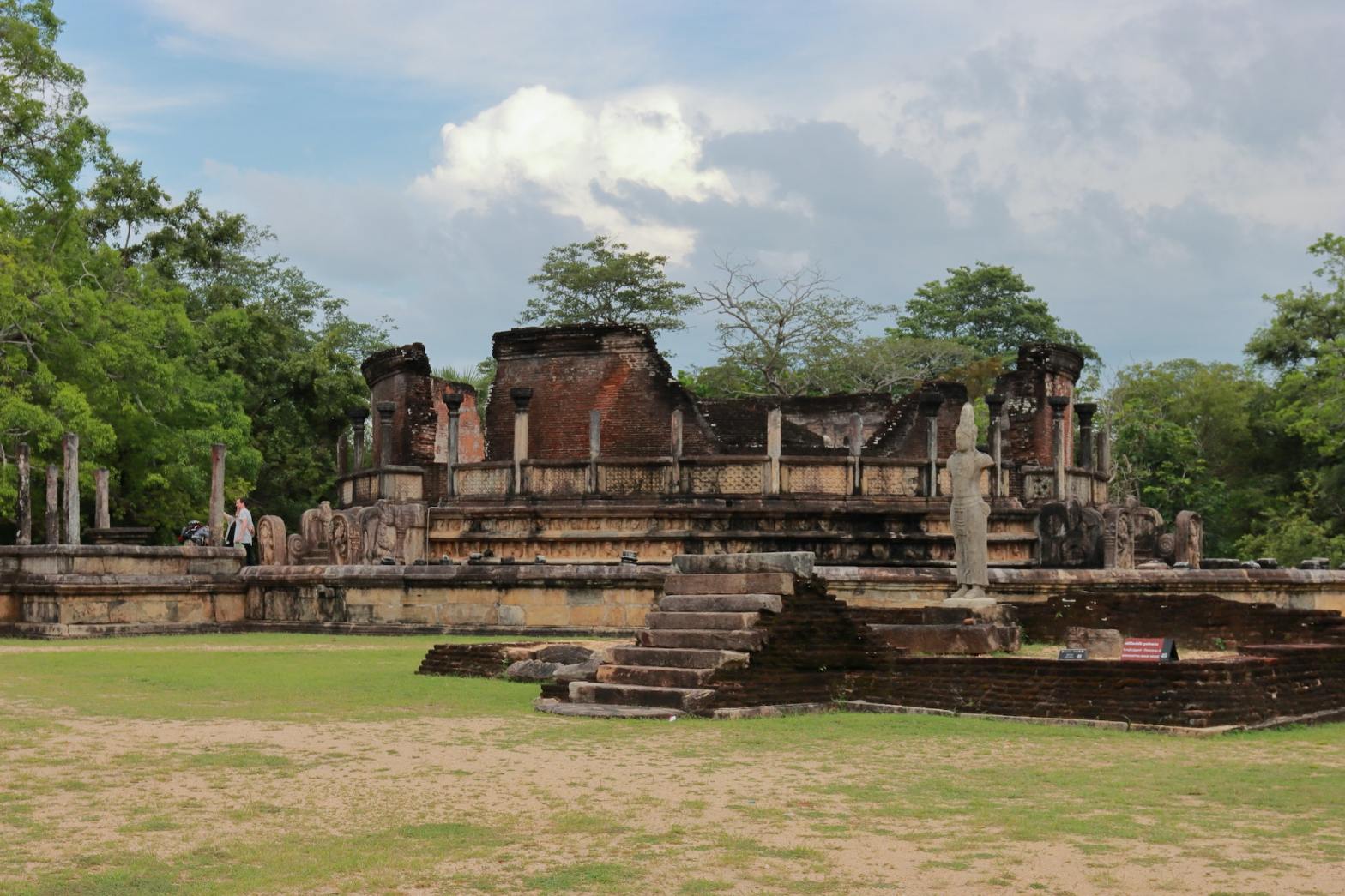
3. The Ancient City of Polonnaruwa
Sri Lanka’s second oldest city, Polonnaruwa, was first declared as the nation’s capital city by King Vijayabahu after he defeated Chola invaders in 1070, reuniting the nation once more.
During his reign, King Parakramabahu created a vast irrigation and reservoir system in Polonnaruwa that had the appearance of natural inland seas. As a result of this sophisticated infrastructure, Polonnaruwa’s rice cultivation systems earned Sri Lanka a global reputation as the Granary of the Orient.
Polonnaruwa’s ruins date back to Parakramabahu’s reign from 1153 to 1186, with the richness and glamour of this ancient capital still evident to this day.
4. Galle Fort and Old Town
A visit to Galle Fort is a popular feature on many Sri Lankan itineraries, and with good reason. Perched on the southwest corner of this tear-shaped island, Galle Fort was originally built by the Portuguese in the 16th century and added to over the years, largely by the Dutch.
Today, the port city provides a charming mix of old and new, retaining much of its historic charm in the form of cobblestone streets and beautifully preserved buildings. In addition, visitors to Galle can also enjoy the comfort of restored luxury villas, gourmet dining, and bijou boutiques, providing the best of both worlds.
5. Sigiriya Lion Rock Fortress
Rising majestically from Sri Lanka’s central plains, Sigiriya Lion Rock Fortress was built by King Kassapa, and is arguably the most dramatic sight in the entire country. With near vertical walls soaring 180 meters high, this abandoned palace has been described as the eighth wonder of the world.
The summit of Sigiriya Fortress is reached via a grueling series of steep staircases, with visitors trudging around the great rock before finally emerging through the mouth of a huge lion. Along the way, visitors pass a series of ancient frescos that remain in impressive condition today. There is even a pair of colossal lion’s paws at the base of the rock. Those who make it to the top are rewarded with stunning 360-degree views of the dense jungle surroundings.
Having been assigned World Heritage Site status in 1982, much still remains of this ancient capital, including irrigation technologies that confound modern engineers and rainwater reservoirs that remain functional to this day.
5 UNESCO World Heritage Sites That No Visitor to Sri Lanka Should Miss
 David Geithner